















Popular Search
Blogs
What kind of running shoes do you recommend?

Get to know the types of running shoes and how to choose them
Which running shoes are good? Recommendations
Get to know the types of running shoes and how to choose running shoes
Exercising is unavoidable because it is necessary for a long, healthy life, free from illnesses and the need for expensive medical treatments. Nowadays, running is a simple exercise; as long as you have space to run near your home, you can work out. However, a word of caution before heading out to run: you should have running shoes that fit your anatomy and foot shape, and are comfortable to wear. You should choose running shoes suitable for the running surface as well for greater agility.
First, let's look at the components of hygienic running shoes.
- Upper: The upper part made of material that covers the top of the foot, helping to hold the foot in place and preventing excessive side-to-side movement.
- Overlays: The outer layer consisting of synthetic materials, usually in a cross shape, to support and reinforce the foot.
- Heel Counter: A rigid or semi-rigid device located at the heel of the shoe, used to hold the foot in place.
- Collar: The foam padding surrounding the ankle that helps keep the foot secure.
- Toe Box: The front part of the upper that creates space above and around the toes.
- The Outsole: The bottom part of the shoe that makes contact with the road surface. Generally, the outsole is made of rubber. It provides traction and contributes to the softness or stability of the shoe, as well as providing stiffness and flexibility for the shoe's torsion.
- Carbon Rubber: A durable carbon rubber compound that makes up the outsole of most running shoes.
- Blown Rubber: Air-injected rubber that is lighter, softer, and more flexible than standard rubber. Blown rubber is often found in the forefoot, offering a good feel but being less durable than carbon rubber.
- EVA (Outsole-Grade EVA): A type of EVA foam outsole designed for ground contact. It is lighter and more flexible than rubber, but may have less durability over time.
- Shape: Outsoles range in shape from curved to straight. Curved shoes are best for runners with neutral pronation, while straighter shoes are stiffer and best for those who overpronate.
- The Midsole: Located between the upper and the outsole. The midsole is the part of the shoe with technology that helps reduce impact and control movement. The midsole is usually made of foam-like plastic material, which should be durable and of good quality for comfort.
- The Last: The mold over which the upper is attached to the midsole, defining the volume and width of the shoe for each size.
Besides considering the components and features of hygienic running shoes, we must also choose our running shoes based on the surface we run on and our running style.
Running shoes categorized by running surface
Road-Running Shoes
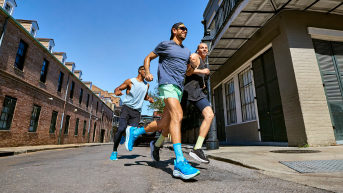
Road-running shoes are designed for running on sidewalks and compact surfaces. They are lightweight and flexible to support repeated strides on hard, even surfaces. Suitable for those who run on pavements, roads, or tracks, road-running shoes have smooth, flat outsoles to create a uniform surface for running on asphalt.
Trail Shoes
Trail shoes are specifically designed for running or walking in rugged terrain, such as paths with rocks, mud, or uneven surfaces. They range from speed-oriented trail shoes to those resembling hiking boots with thicker uppers to protect against sharp rocks. Runners who need to traverse mud, dirt, rocks, and other obstacles on trails or footpaths require shoes that offer maximum stability and protection; therefore, trail-running shoes are highly suitable for you.
Today, many amateur and professional runners use trail-running shoes, which has led to increased sales in recent years. This type of shoe is designed for running on varied or uneven surfaces, from mud to grass and other outdoor terrains. Trail shoes are a blend of running sneakers and hiking boots, protecting your ankles and feet from rough or uneven ground.
Furthermore, trail-running shoes provide excellent grip for better traction and control on rough, uneven, and slippery surfaces, usually achieved through stickier rubber outsoles. Choosing trail-running shoes depends on how much the runner runs, the weather conditions, and the terrain you are running on.
- All-Terrain Running Shoes
- The best all-terrain running shoes are designed for various terrains, from roots and rocks to dirt and mud. Therefore, they are the perfect shoes for running in the city, suburbs, on grass, on sand, or on wet sidewalks. All-terrain shoes are also designed to provide maximum support and protection for your feet.
Running shoes categorized by running style
- Generally, cushioned shoes provide extra shock absorption so that the foot makes soft, comfortable contact with the ground. Most cushioned shoes are built with impact-dispersing features in the outsole or midsole, usually located in the heel or forefoot area.
- Cushioned running shoes are generally recommended for runners with neutral gait as they provide both shock absorption and protection with little to no stability support.
- These are highly durable and heavier than other types. They are designed to absorb the impact of overpronation and help correct the inward rolling of the ankle during running.
- Motion control shoes are usually recommended for runners with low arches or moderate-to-severe overpronation. Motion control shoes limit excessive movement and are typically stiffer than regular running or sports shoes, with a wider base. They are also suitable for heavier individuals seeking a shoe with high stability and durability.
- If you are a speed runner, you will need very lightweight running shoes, also known as racing flats or cross-country spikes, which are suitable for speed-oriented workouts like sprinting, intervals, and racing. Lightweight shoes are made with foam and feature less underfoot cushioning, allowing for more natural and powerful foot movement.
- However, a disadvantage is that most lightweight running shoes do not have the same level of cushioning and shock absorption as standard neutral or stability road-running shoes.
Every runner, whether running for health or as a professional athlete, should choose quality running shoes that are reasonably priced and suitable for the terrain or intended use. One should select shoes made of durable, high-quality materials that offer long-lasting value, so as to avoid the need for frequent replacement. Therefore, if you are looking for a great pair of running shoes, visit a leading hub for running shoes and running gear, REV RUNNR, an importer and retailer of sports goods (Sportswear and Footwear) from leading brands such as HOKA, SAUCONY, KAILAS, VIBRAM, SOFSOLE, and lifestyle fashion brands like CHAMPION and TEVA.
Contact us at
Line: Click to add friend
Facebook : https://www.facebook.com/sportsrev.th